Water Needs
Area Summary: Utah’s climate, reliance on mountain snowmelt, and expected future population growth strain our water supply. Thus, wise water use and management is essential. Efforts are underway to more effectively manage the state’s water supply, including the development of a statewide water plan. We focus on three sub-areas: water data, the Agricultural Water Optimization Program, and installing secondary water meters. As the beehive ratings show, much of the work remains in process.
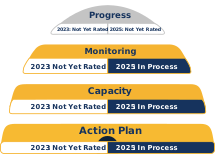
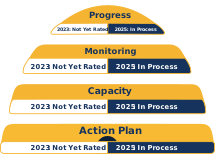
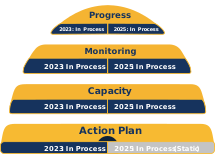
Area Summary: Utah’s climate, reliance on mountain snowmelt, and expected future population growth strain our water supply. Thus, wise water use and management is essential. Efforts are underway to more effectively manage the state’s water supply, including the development of a statewide water plan. We focus on three sub-areas: water data, the Agricultural Water Optimization Program, and installing secondary water meters. As the beehive ratings show, much of the work remains in process.
Water Infrastructure
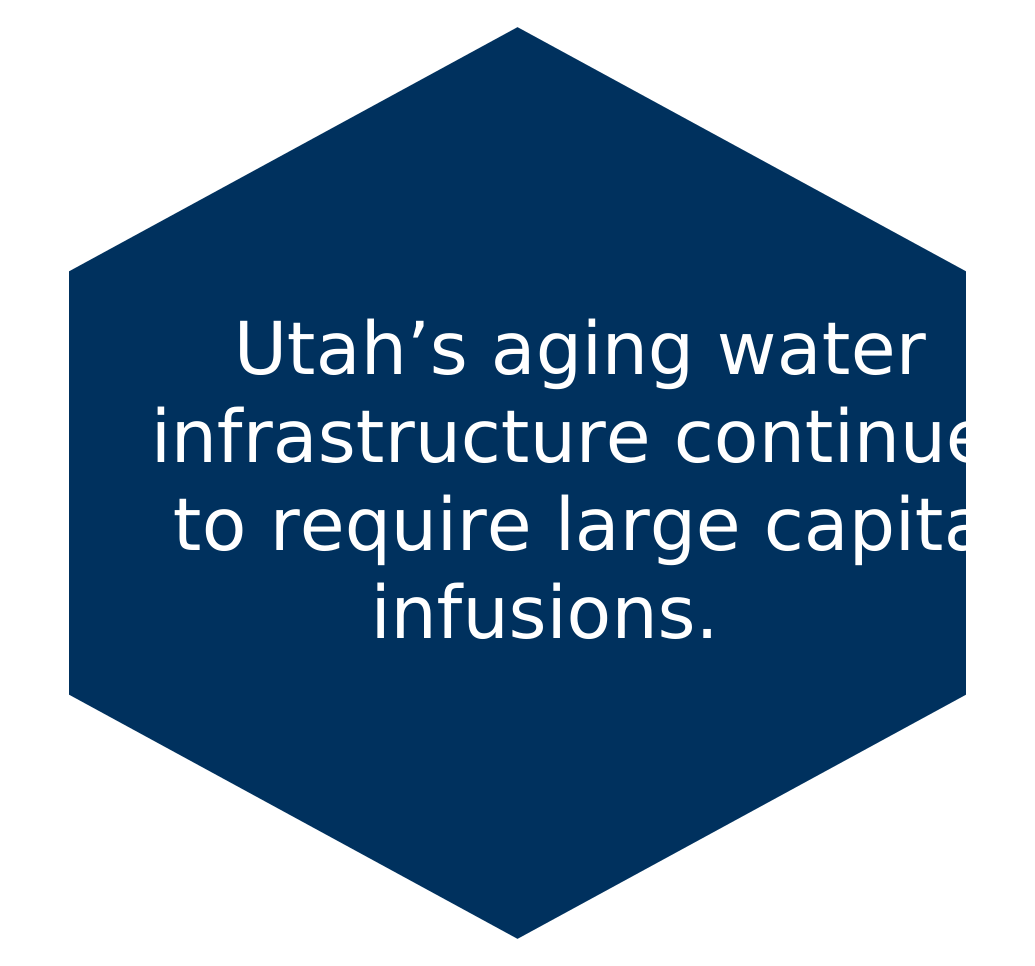
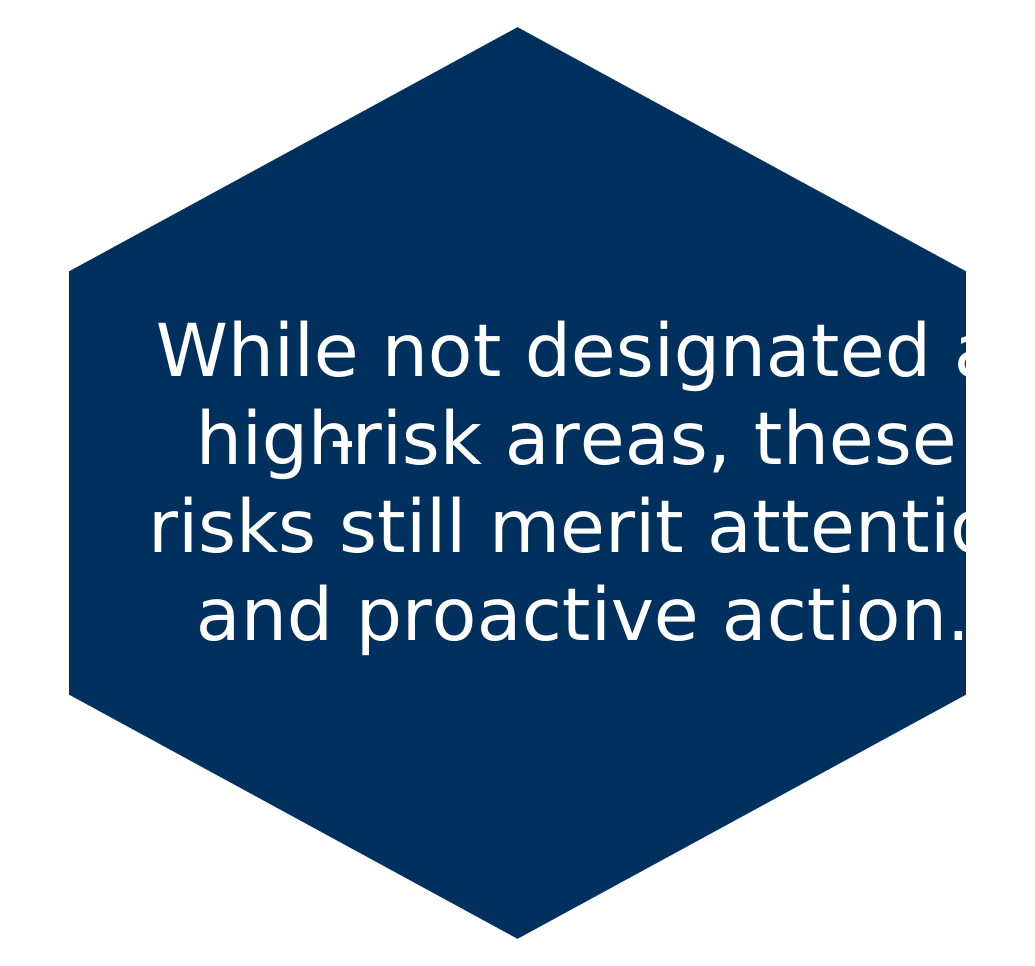
Area Summary: Replacing aging water infrastructure and building new infrastructure to meet a growing population continues to be a significant need for Utah. Failure of this infrastructure could put human lives at risk and restrict access to water for many people. We focus on high-hazard dams, aqueducts, and public water systems. While we have not conducted a full in-depth audit in these areas, we offer several action items for agencies and the Legislature to consider. The Legislature could also consider requesting full audits of these areas.
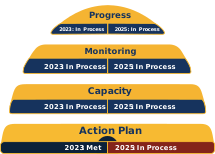
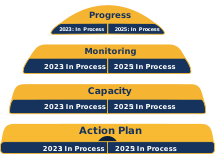
Area Summary: Replacing aging water infrastructure and building new infrastructure to meet a growing population continues to be a significant need for Utah. Failure of this infrastructure could put human lives at risk and restrict access to water for many people. We focus on high-hazard dams, aqueducts, and public water systems. While we have not conducted a full in-depth audit in these areas, we offer several action items for agencies and the Legislature to consider. The Legislature could also consider requesting full audits of these areas.

Educational Pathways
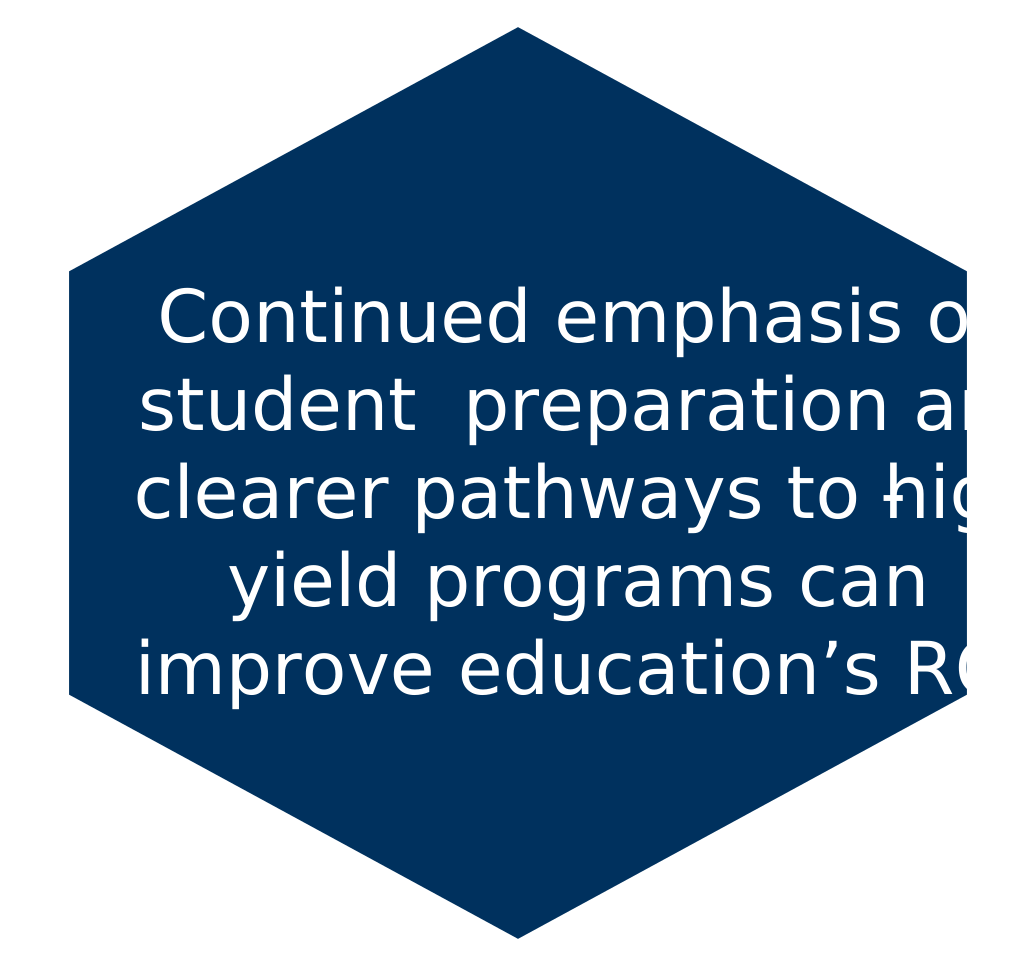
Area Summary: Cost of living remains a top concern for Utah citizens. An effective and efficient education system is an essential tool to address this risk as it can help citizens increase their earning potential. Thus, education and workforce pathways should be aligned with workforce demand and effectively help students access postsecondary programs—and complete them. Both Utah’s K-12 system, overseen by the Utah State Board of Education and the Utah System of Higher Education (USHE) play a role in this risk area. Past audits have found weaknesses in both systems that they are addressing. For example, declines in math proficiency and ACT scores among K-12 students is concerning as it correlates with a student’s ability to succeed in high-yield, high-demand postsecondary programs. Additionally, efforts are underway at Utah’s higher education institutions to more fully understand the taxpayer return on investment for their programs.
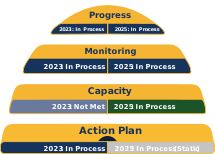
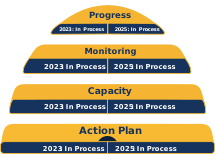
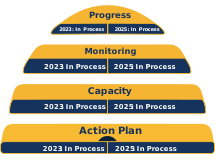
Area Summary: Cost of living remains a top concern for Utah citizens. An effective and efficient education system is an essential tool to address this risk as it can help citizens increase their earning potential. Thus, education and workforce pathways should be aligned with workforce demand and effectively help students access postsecondary programs—and complete them. Both Utah’s K-12 system, overseen by the Utah State Board of Education and the Utah System of Higher Education (USHE) play a role in this risk area. Past audits have found weaknesses in both systems that they are addressing. For example, declines in math proficiency and ACT scores among K-12 students is concerning as it correlates with a student’s ability to succeed in high-yield, high-demand postsecondary programs. Additionally, efforts are underway at Utah’s higher education institutions to more fully understand the taxpayer return on investment for their programs.

Behavioral Health
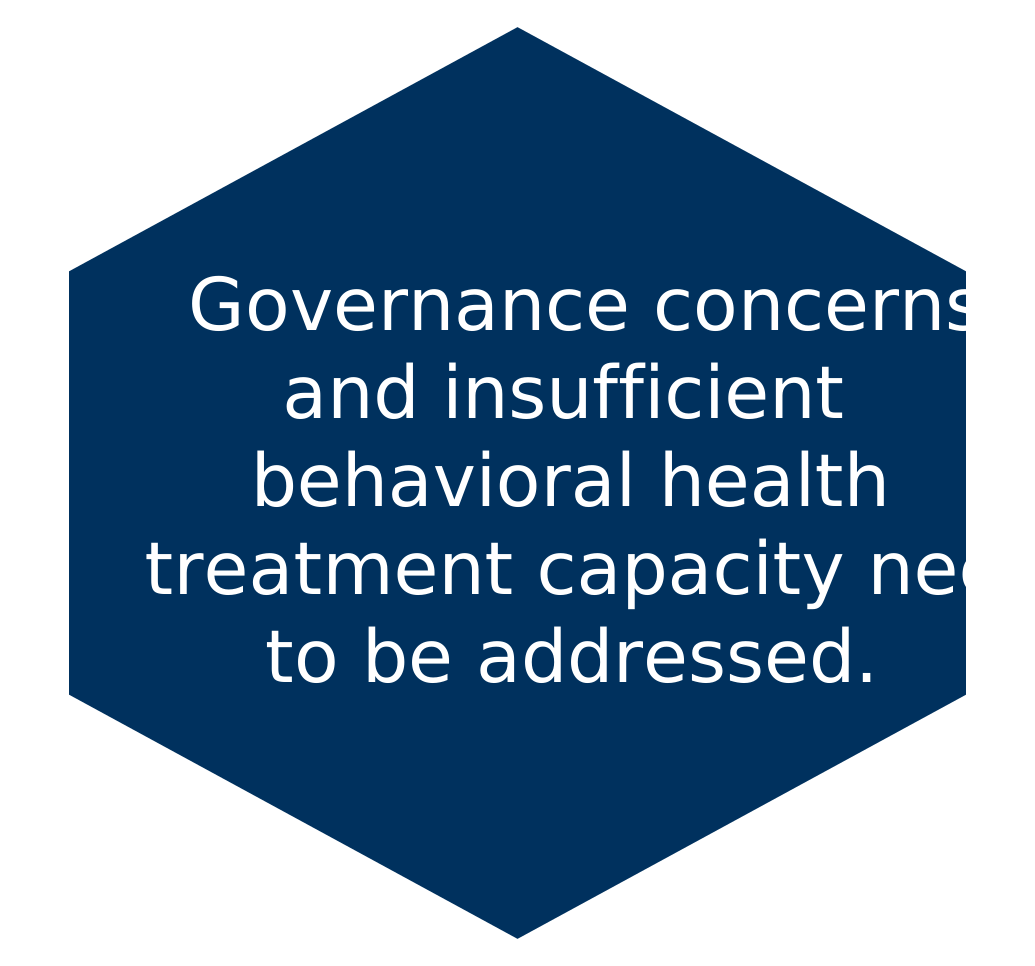
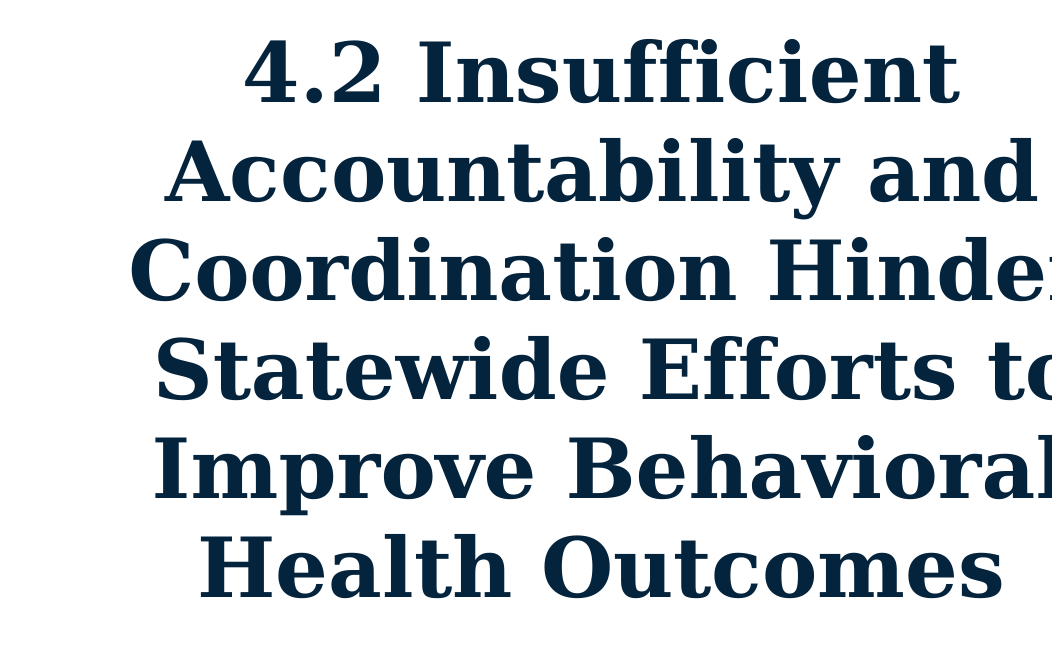
Area Summary: Utah saw nearly 700 individuals die from suicide in 2023—it is the second leading cause of death for Utahns ages 10 to 44. Additionally, Utah’s suicide rates continue to be well above the national average. Unfortunately, Utah’s behavioral health workforce cannot keep up with treatment needs. About 50 percent of Utah adults and 48 percent of Utah youth with a mental illness did not receive treatment, which is similar to what we reported in 2023. In our recent behavioral health audits, we found that there is no true centralized authority, despite the recent addition of the Utah Behavioral Health Commission. Because of this, the current governance structure is limited in its ability to coordinate and hold the many entities overseeing the behavioral health system accountable. The fragmented system and data sharing challenges may contribute to diminished health outcomes. Recommendations from our audits can help address these concerns.
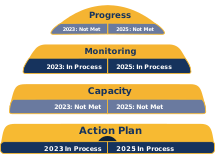
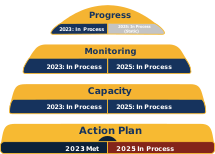
Area Summary: Utah saw nearly 700 individuals die from suicide in 2023—it is the second leading cause of death for Utahns ages 10 to 44. Additionally, Utah’s suicide rates continue to be well above the national average. Unfortunately, Utah’s behavioral health workforce cannot keep up with treatment needs. About 50 percent of Utah adults and 48 percent of Utah youth with a mental illness did not receive treatment, which is similar to what we reported in 2023. In our recent behavioral health audits, we found that there is no true centralized authority, despite the recent addition of the Utah Behavioral Health Commission. Because of this, the current governance structure is limited in its ability to coordinate and hold the many entities overseeing the behavioral health system accountable. The fragmented system and data sharing challenges may contribute to diminished health outcomes. Recommendations from our audits can help address these concerns.

Housing Affordability
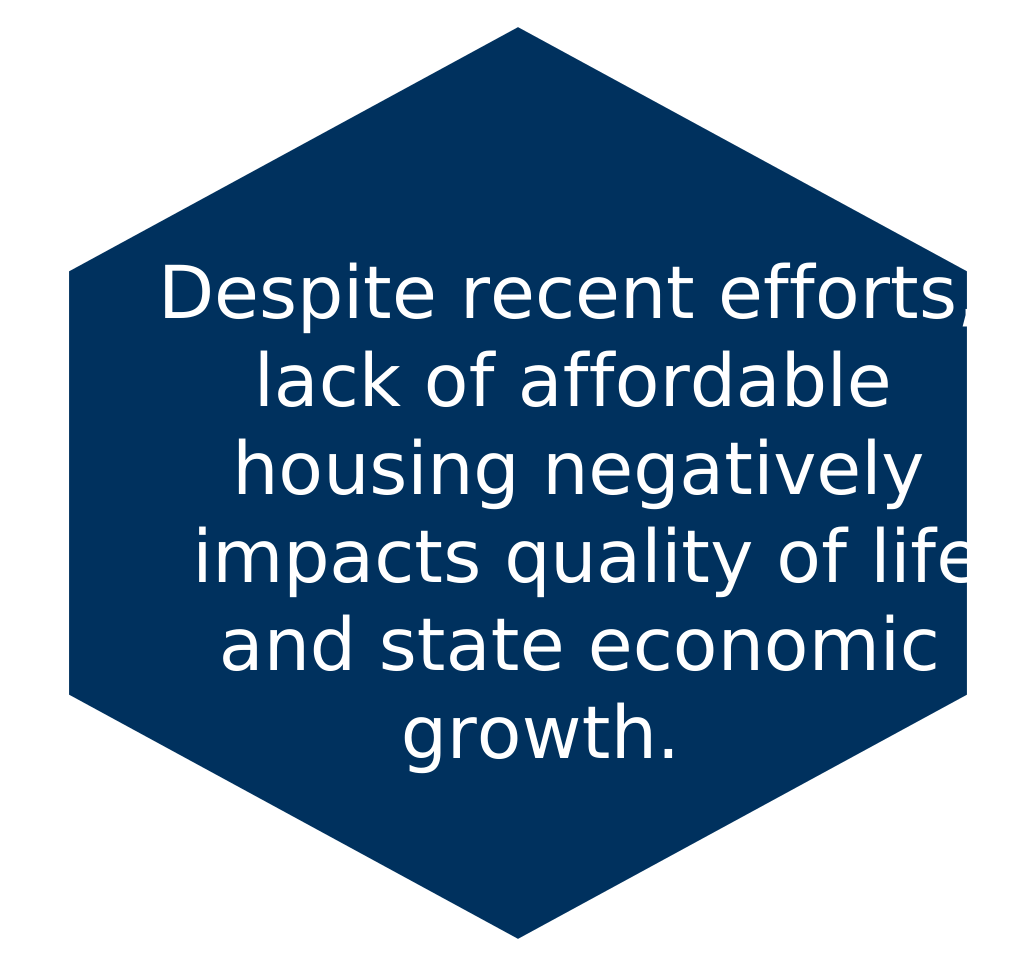
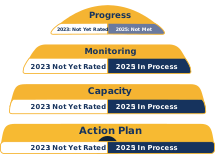
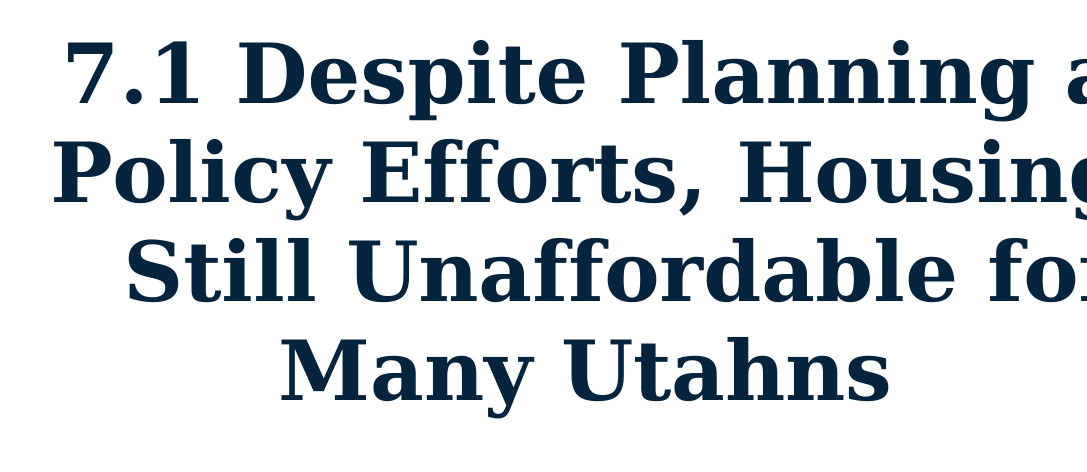
Area Summary: Utah’s significant population growth, combined with slower housing production after the Great Recession, has resulted in a shortage of housing units. Without enough housing to satisfy demand, home prices have increased, making it difficult for buyers to find housing within an affordable price range. Though deficient housing supply is a driving component of Utah’s housing problems, other significant factors—like mortgage interest rates and the cost of construction materials and labor—also impact housing affordability. The lack of affordable housing can negatively impact Utah’s future prosperity, including the state’s economy, labor market, transportation, and quality of life. Thus, addressing housing affordability is a strategic imperative for all policymakers in Utah.
Area Summary: Utah’s significant population growth, combined with slower housing production after the Great Recession, has resulted in a shortage of housing units. Without enough housing to satisfy demand, home prices have increased, making it difficult for buyers to find housing within an affordable price range. Though deficient housing supply is a driving component of Utah’s housing problems, other significant factors—like mortgage interest rates and the cost of construction materials and labor—also impact housing affordability. The lack of affordable housing can negatively impact Utah’s future prosperity, including the state’s economy, labor market, transportation, and quality of life. Thus, addressing housing affordability is a strategic imperative for all policymakers in Utah.

Transportation
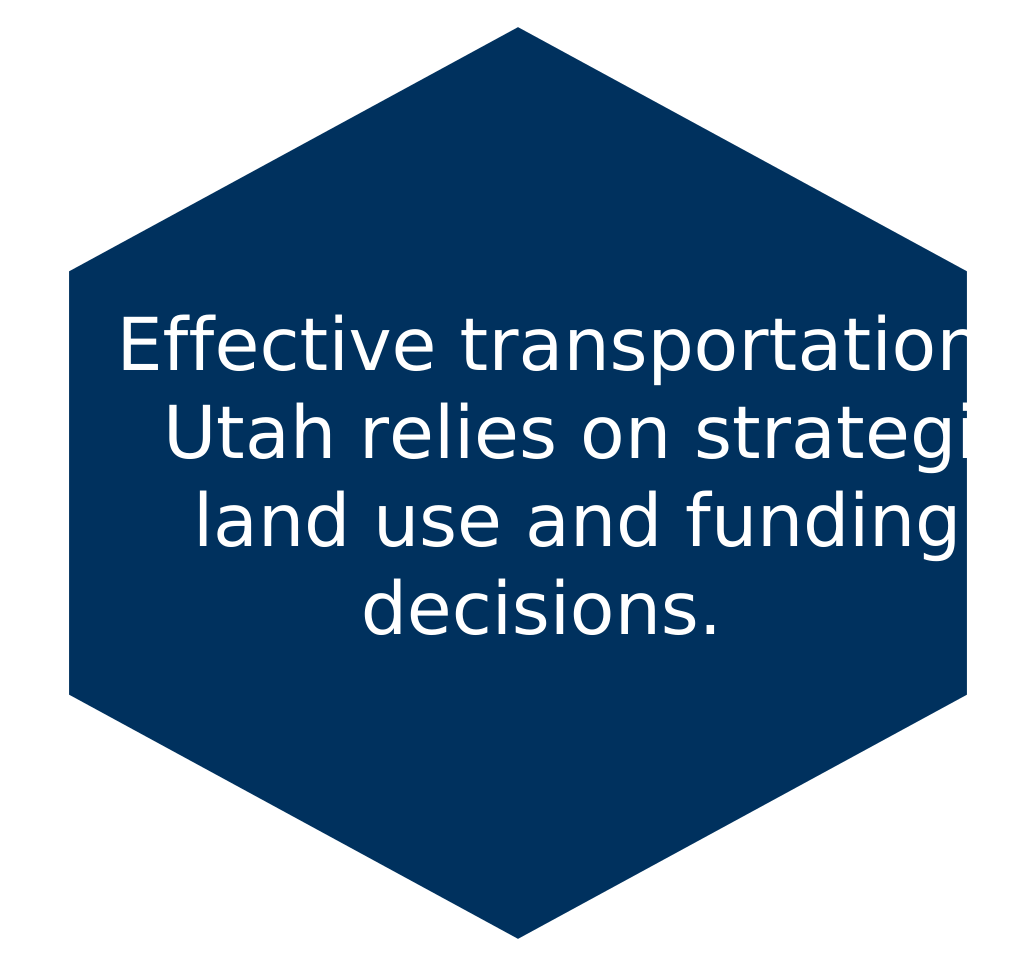
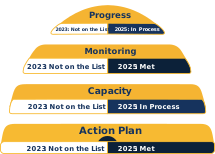
Area Summary: Although transportation is a new addition to the high-risk list for 2025, effective transportation has always been foundational to maintaining Utah’s strong economy and high quality of life. Utah’s transportation partners have produced detailed long-range planning documents that identify issues and prescribe possible solutions. However, the challenge will be implementing their recommendations at all levels of government.
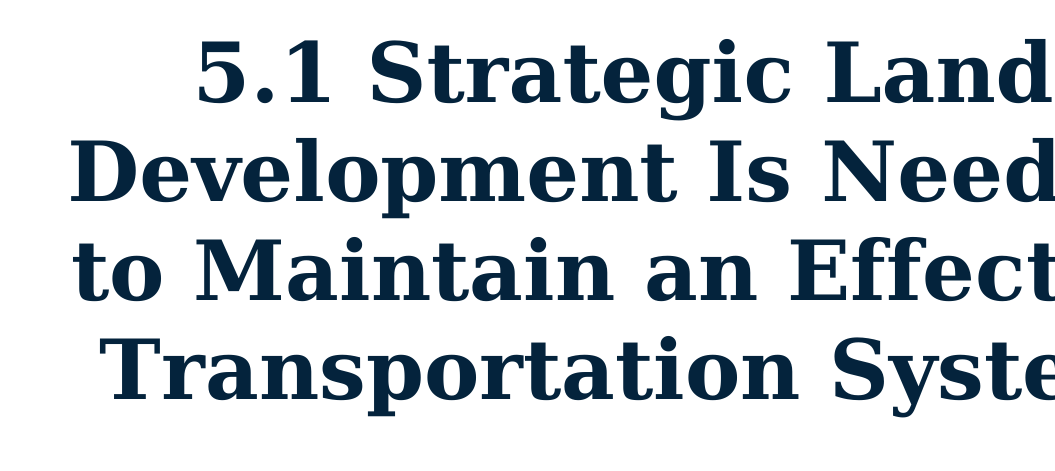
Area Summary: Although transportation is a new addition to the high-risk list for 2025, effective transportation has always been foundational to maintaining Utah’s strong economy and high quality of life. Utah’s transportation partners have produced detailed long-range planning documents that identify issues and prescribe possible solutions. However, the challenge will be implementing their recommendations at all levels of government.

Energy Policy
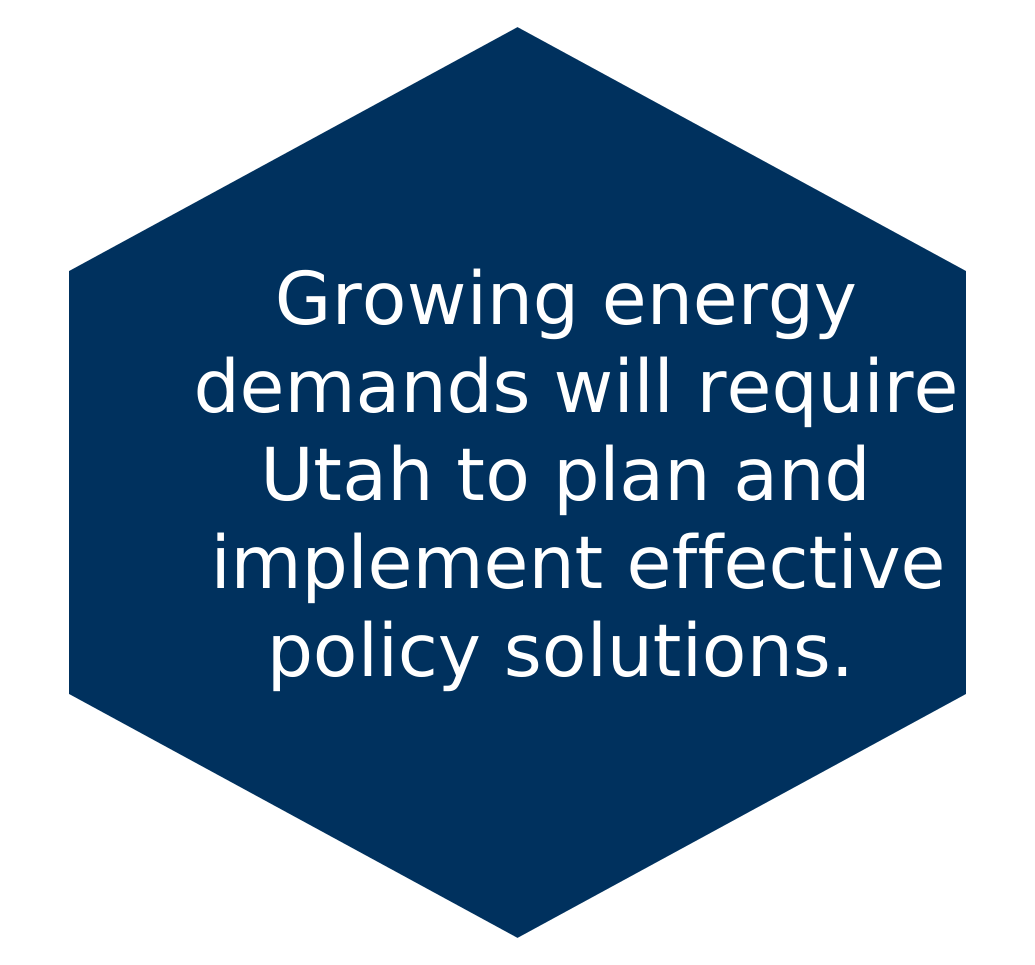
Area Summary: Emerging energy demands are increasing the risks to electricity reliability in Utah and the western United States. According to multiple sources, the supply of electricity is not growing fast enough to keep up with projected demand growth and variability. Thus, Utah (and the West) must move quickly and decisively to ensure electricity resource adequacy. The Governor recently announced the Operation Gigawatt initiative, which seeks to double energy production in Utah. Similarly, the Legislature passed bills in 2024 and 2025 that will help advance nuclear energy development in Utah. Our 2023 audit, A Performance Audit of Utah’s State Energy Policy, found that the Office of Energy Development must more effectively plan to meet the increasing demand. Meeting projected capacity demands will be a challenge. Failure to increase capacity over the next decade will increase the risk of serious and more frequent disruptions.
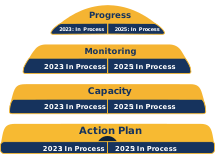
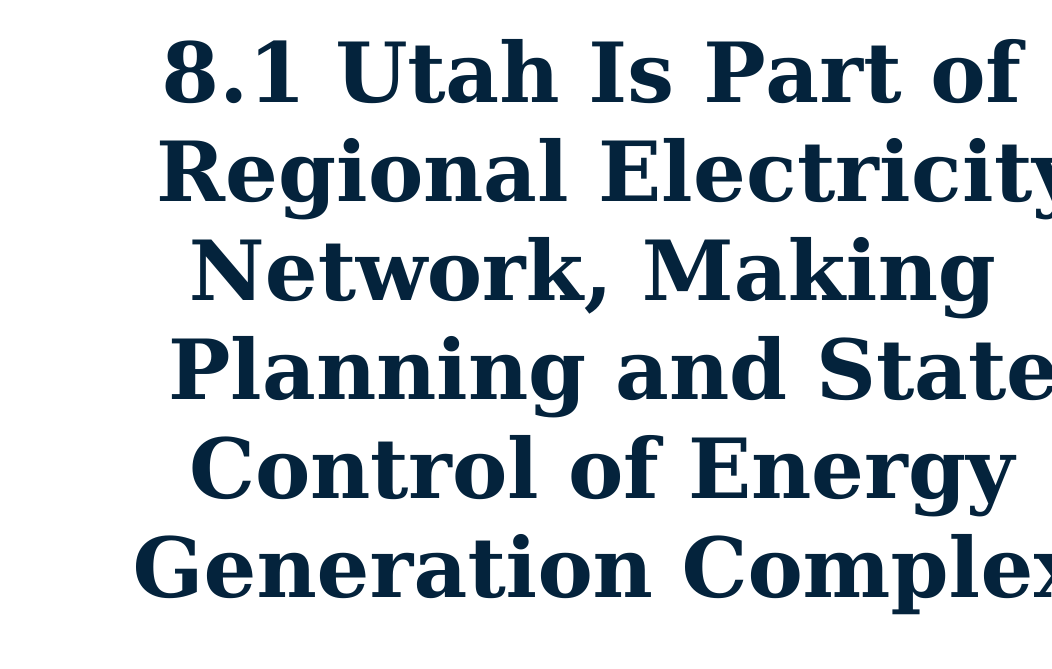
Area Summary: Emerging energy demands are increasing the risks to electricity reliability in Utah and the western United States. According to multiple sources, the supply of electricity is not growing fast enough to keep up with projected demand growth and variability. Thus, Utah (and the West) must move quickly and decisively to ensure electricity resource adequacy. The Governor recently announced the Operation Gigawatt initiative, which seeks to double energy production in Utah. Similarly, the Legislature passed bills in 2024 and 2025 that will help advance nuclear energy development in Utah. Our 2023 audit, A Performance Audit of Utah’s State Energy Policy, found that the Office of Energy Development must more effectively plan to meet the increasing demand. Meeting projected capacity demands will be a challenge. Failure to increase capacity over the next decade will increase the risk of serious and more frequent disruptions.
Public Workforce Shortages
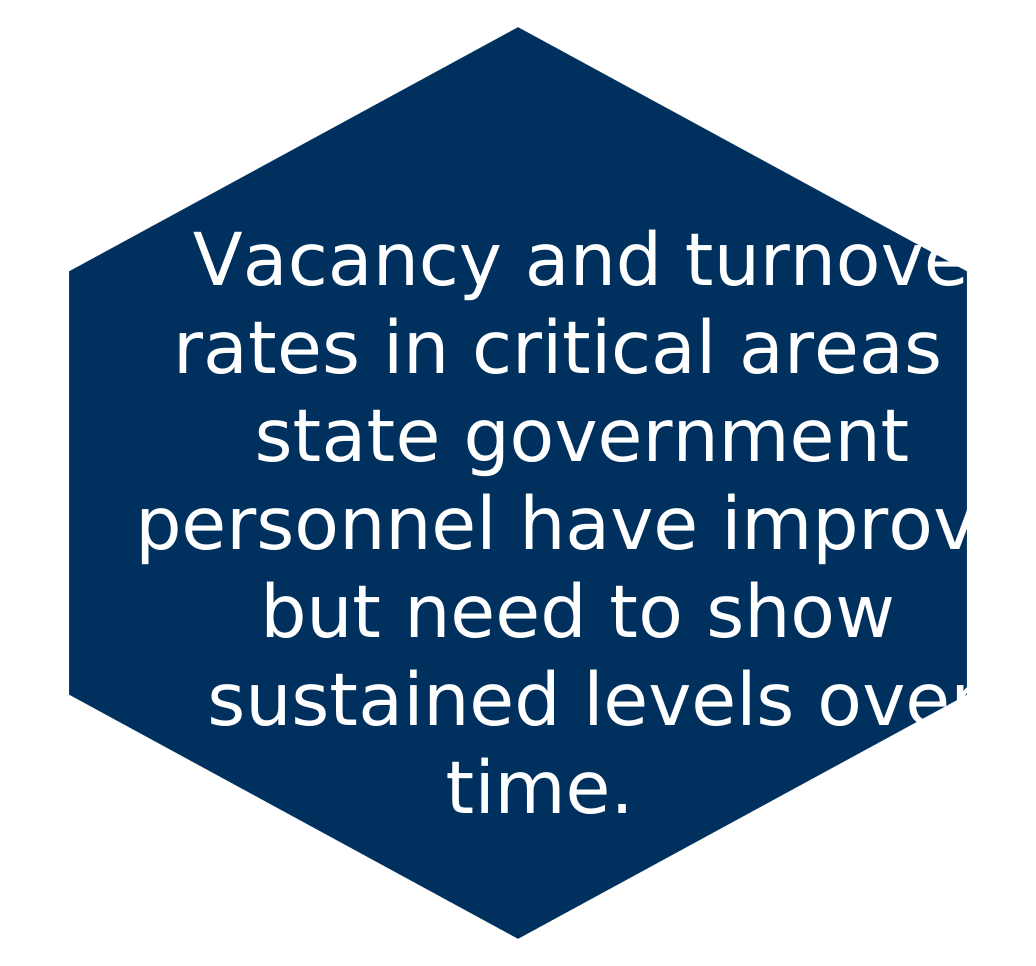
Area Summary:We showed in 2023 that personnel turnover and vacancy rates at various state entities were concerning, including the Department of Corrections (UDC), the Department of Public Safety (DPS), the Department of Health and Human Services, and the Department of Alcoholic Beverage Services. For this iteration of the high-risk list, we chose to focus on those jobs where turnover and vacancy rates have proven to be a risk to health, safety, and human life—and for which we have completed a full audit. Specifically, we found in 2023 that shortages at the Utah State Correctional Facility (USCF) had raised concerns about the safety of inmates and staff. In 2022, we found that high turnover at Adult Probation and Parole (AP&P) has contributed to increased workloads for officers and decreased effectiveness on specialized cases. Hiring and turnover rates for correctional officers and AP&P Agents have improved substantially. We will assess whether the improved rates are sustained over time during future high-risk reviews. The Legislature may choose whether to request a more in-depth review of other state-level turnover and retention concerns we do not review here.
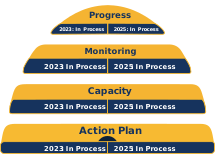
Area Summary:We showed in 2023 that personnel turnover and vacancy rates at various state entities were concerning, including the Department of Corrections (UDC), the Department of Public Safety (DPS), the Department of Health and Human Services, and the Department of Alcoholic Beverage Services. For this iteration of the high-risk list, we chose to focus on those jobs where turnover and vacancy rates have proven to be a risk to health, safety, and human life—and for which we have completed a full audit. Specifically, we found in 2023 that shortages at the Utah State Correctional Facility (USCF) had raised concerns about the safety of inmates and staff. In 2022, we found that high turnover at Adult Probation and Parole (AP&P) has contributed to increased workloads for officers and decreased effectiveness on specialized cases. Hiring and turnover rates for correctional officers and AP&P Agents have improved substantially. We will assess whether the improved rates are sustained over time during future high-risk reviews. The Legislature may choose whether to request a more in-depth review of other state-level turnover and retention concerns we do not review here.

Cyber Security
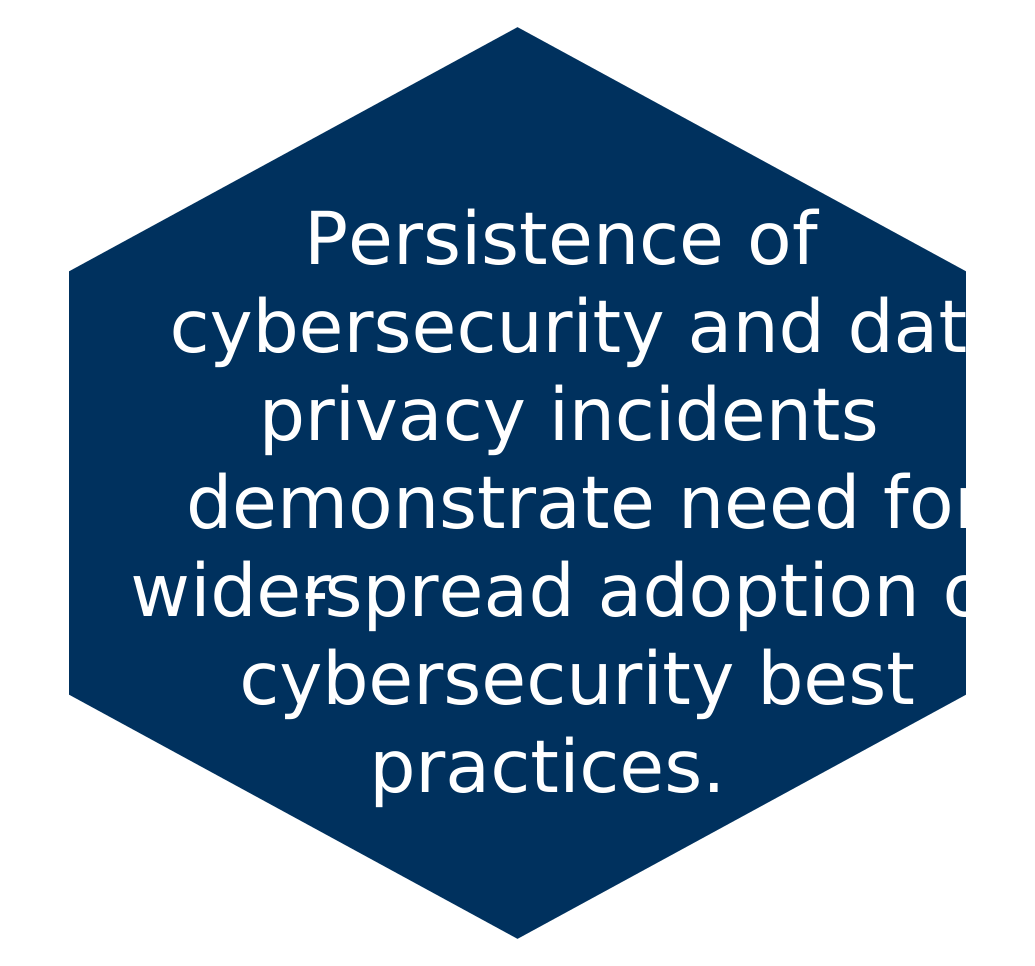
Area Summary: Utah’s critical infrastructures—such as energy, transportation systems, communications, and financial services—are dependent on technology systems to carry out fundamental operations. Over the past decade, Utah government entities have witnessed significant escalations in cyber incidents. The security of such systems and data is vital to safeguarding individual privacy and protecting Utah’s security, prosperity, and well-being. Risk dimension ratings for this area are primarily based on our 2023 reports on state cybersecurity and state data privacy, as well as their two-year audit recommendation follow-ups.
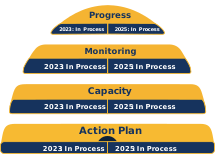
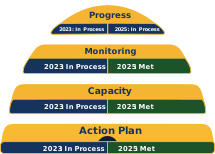
Area Summary: Utah’s critical infrastructures—such as energy, transportation systems, communications, and financial services—are dependent on technology systems to carry out fundamental operations. Over the past decade, Utah government entities have witnessed significant escalations in cyber incidents. The security of such systems and data is vital to safeguarding individual privacy and protecting Utah’s security, prosperity, and well-being. Risk dimension ratings for this area are primarily based on our 2023 reports on state cybersecurity and state data privacy, as well as their two-year audit recommendation follow-ups.
State and Federal Revenue Diversification
Area Summary: As we stated in 2023, the state’s structural budget integrity could be at risk due to threats in revenue areas. Concerns with the sales tax and income tax bases also limit Utah’s budget flexibility, which could impair government services. We also include federal revenue reliance as a new risk area. The Congressional Budget Office and Government Accountability Office have both reported that the country’s current fiscal path is unsustainable. In 2024, about a quarter of the state’s budget came from the federal government. Such funding, and the services it provides, could be at risk given the federal debt situation.
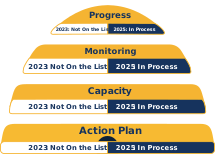
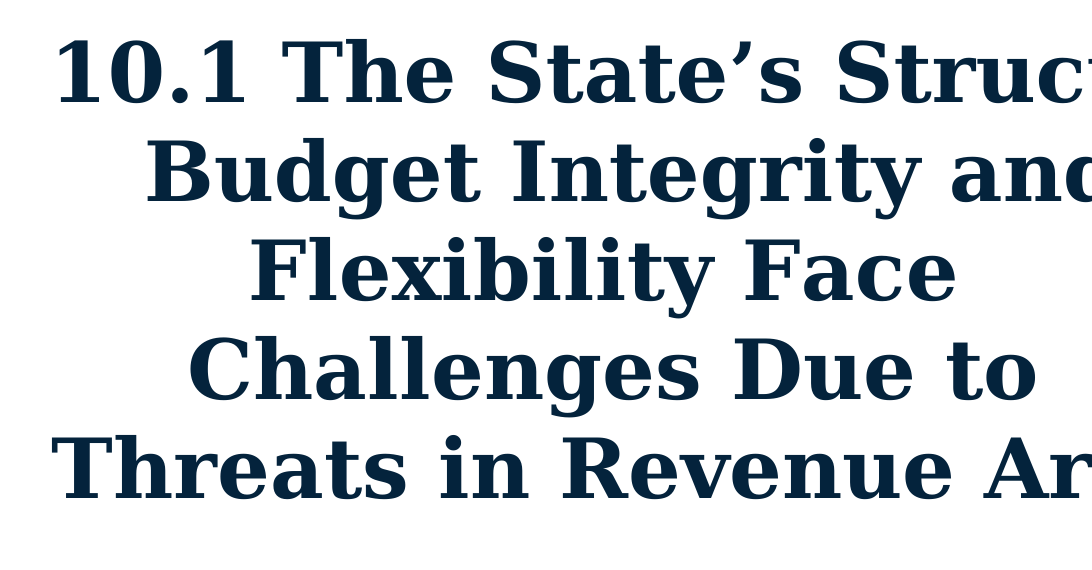
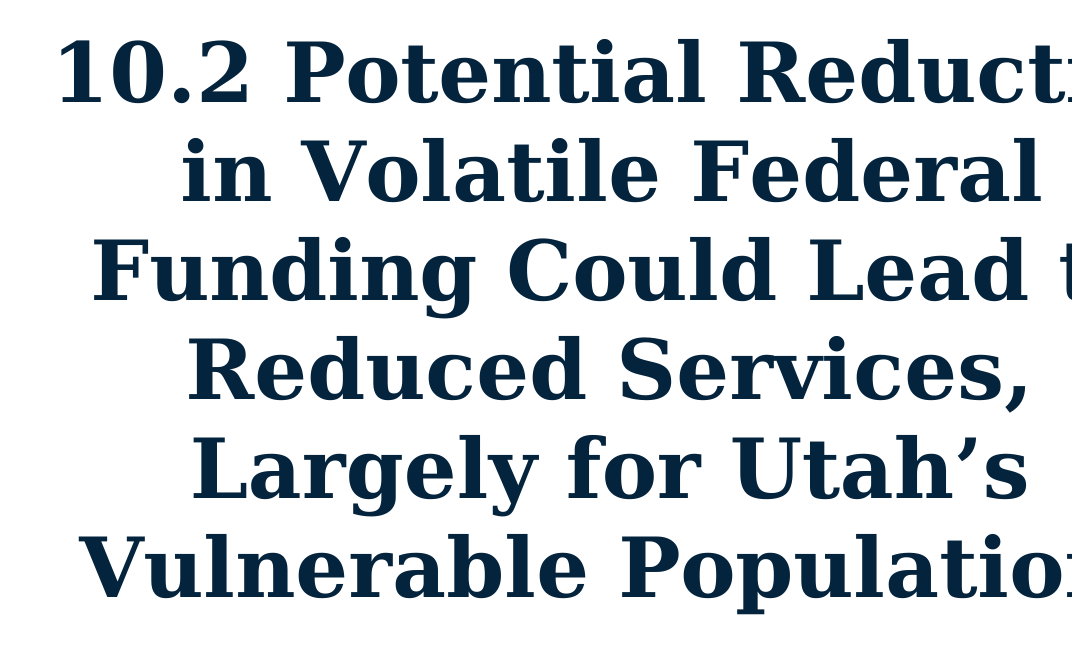
Area Summary: As we stated in 2023, the state’s structural budget integrity could be at risk due to threats in revenue areas. Concerns with the sales tax and income tax bases also limit Utah’s budget flexibility, which could impair government services. We also include federal revenue reliance as a new risk area. The Congressional Budget Office and Government Accountability Office have both reported that the country’s current fiscal path is unsustainable. In 2024, about a quarter of the state’s budget came from the federal government. Such funding, and the services it provides, could be at risk given the federal debt situation.
Watchlist
Child and Family Success: The Division of Child and Family Services (DCFS) works with youth at substantially elevated risks for negative health outcomes relative to Utah’s state average. Because of this, its ability to effectively execute its mission is critical. The Legislature has prioritized an audit of DCFS, which we will release in December 2025. Additionally, childcare shortages is a serious challenge facing Utah families. According to one study requested by the Legislature, licensed and license-exempt childcare providers can only provide for about 36 percent of Utah’s childcare demand.
Public Schools Building Seismic Safety: The Utah K-12 Public Schools Unreinforced Masonry Inventory (Inventory) shows that more than 72,000 children across 119 schools could be at a risk of death or serious injury in the event of a large magnitude earthquake. This is because those schools are classified as unreinforced masonry (URM) buildings. While some districts have worked on retrofitting and replacing URM schools for over 20 years, the Inventory reported that periodic structural inspections are not required by law, so schools often do not receive seismic improvements in timely intervals.
Air Quality: Utah’s wintertime air pollution has improved over the past two decades despite a period of growth in population and economic activity, demonstrating state progress in addressing PM2.5 and ground-level ozone. Despite this success, Utah faces a growing list of challenges that threaten the progress the state has made. A report by the Kem C. Gardner Institute noted that hospitals along the Wasatch Front see a forty percent increase in emergency room visits when pollution ranks as unhealthy. Utah experts also estimated that the economic costs of air pollution in Utah in 2020 totaled between $750 million and $3.3 billion.
Contract Performance Management: In our preliminary analysis, we found that many contract managers did not receive training prior to managing a contract, some did not believe they received the tools they needed to be successful, and others did not understand the contract they managed. Managing contracts includes ensuring compliance with the contract terms and conditions, resolving contract disputes, curing contract errors and deficiencies, and measuring or evaluating completed work and contractor performance. Thus, more work should be done to understand (1) why some contract managers reported not meeting with the vendor throughout the year and (2) whether it is negatively impacting service delivery. In preparing this 2025 Watch List, we worked with the Governor’s Office of Planning and Budget (GOPB) on this area they may be able to pursue. To that end, GOPB has prioritized contract performance management as one of their efficiency evaluation projects and anticipates beginning work on it in 2026.
Child and Family Success: The Division of Child and Family Services (DCFS) works with youth at substantially elevated risks for negative health outcomes relative to Utah’s state average. Because of this, its ability to effectively execute its mission is critical. The Legislature has prioritized an audit of DCFS, which we will release in December 2025. Additionally, childcare shortages is a serious challenge facing Utah families. According to one study requested by the Legislature, licensed and license-exempt childcare providers can only provide for about 36 percent of Utah’s childcare demand.
Public Schools Building Seismic Safety: The Utah K-12 Public Schools Unreinforced Masonry Inventory (Inventory) shows that more than 72,000 children across 119 schools could be at a risk of death or serious injury in the event of a large magnitude earthquake. This is because those schools are classified as unreinforced masonry (URM) buildings. While some districts have worked on retrofitting and replacing URM schools for over 20 years, the Inventory reported that periodic structural inspections are not required by law, so schools often do not receive seismic improvements in timely intervals.
Air Quality: Utah’s wintertime air pollution has improved over the past two decades despite a period of growth in population and economic activity, demonstrating state progress in addressing PM2.5 and ground-level ozone. Despite this success, Utah faces a growing list of challenges that threaten the progress the state has made. A report by the Kem C. Gardner Institute noted that hospitals along the Wasatch Front see a forty percent increase in emergency room visits when pollution ranks as unhealthy. Utah experts also estimated that the economic costs of air pollution in Utah in 2020 totaled between $750 million and $3.3 billion.
Contract Performance Management: In our preliminary analysis, we found that many contract managers did not receive training prior to managing a contract, some did not believe they received the tools they needed to be successful, and others did not understand the contract they managed. Managing contracts includes ensuring compliance with the contract terms and conditions, resolving contract disputes, curing contract errors and deficiencies, and measuring or evaluating completed work and contractor performance. Thus, more work should be done to understand (1) why some contract managers reported not meeting with the vendor throughout the year and (2) whether it is negatively impacting service delivery. In preparing this 2025 Watch List, we worked with the Governor’s Office of Planning and Budget (GOPB) on this area they may be able to pursue. To that end, GOPB has prioritized contract performance management as one of their efficiency evaluation projects and anticipates beginning work on it in 2026.